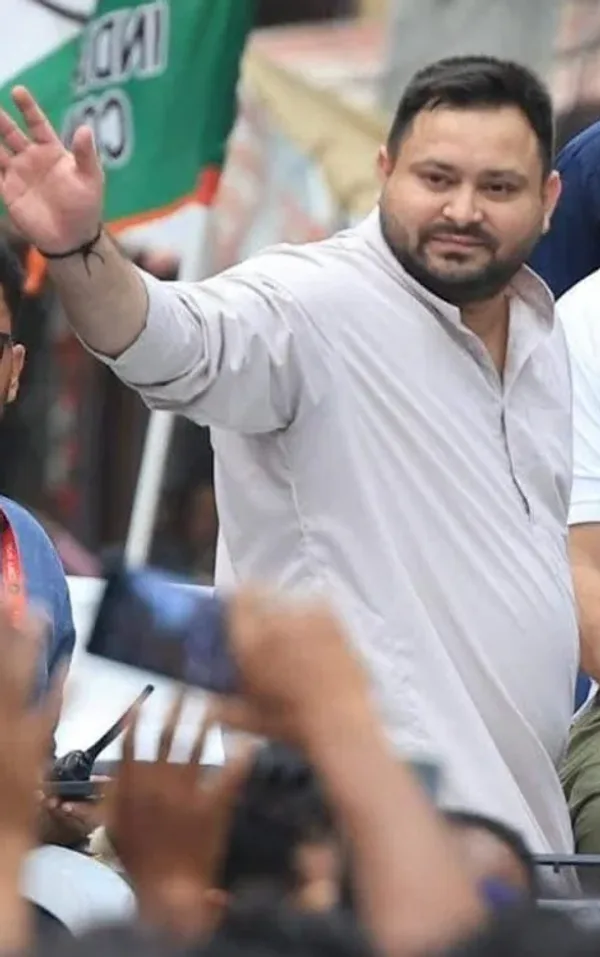

Biography & Career Overview
Akhilesh Yadav, born on 1 July 1973 in Saifai village of Etawah district, Uttar Pradesh, is the national president of the Samajwadi Party, the Member of Parliament for Kannauj in the 18th Lok Sabha and its Samajwadi Party parliamentary leader, and the youngest person ever to serve as Chief Minister of Uttar Pradesh — he assumed the state's highest office at the age of 38 and held it from 2012 to 2017. The son of Mulayam Singh Yadav, the founder of the Samajwadi Party, three-time Chief Minister of Uttar Pradesh and Union Defence Minister, Akhilesh carries one of the most weighty surnames in India's social-justice politics and has spent a quarter-century converting that inheritance into an independent career. In that career there have been pioneering highs — the 2012 landslide of 224 seats, the infrastructure transformation of Uttar Pradesh — bitter lows — the 2017 and 2022 electoral defeats, a dramatic family split — and a remarkable revival that returned him to the Lok Sabha and to the head of an SP that, as part of the national opposition, looms larger in Uttar Pradesh politics than at any point since his chief ministership. He has been an MLA and an MP across both houses of the state legislature and has represented Kannauj, the family's parliamentary fortress, five times at the Centre.
Early Life and Education
Akhilesh was born to Mulayam Singh Yadav and his first wife, Malti Devi. Birth left a permanent shadow on the family: Malti Devi suffered complications while delivering Akhilesh that left her in a vegetative state, and she died in 2003, largely absent from her son's childhood. With Mulayam Singh Yadav's political career ascending — he was already a four-time MP and state president of the socialist Janata Dal formations — the boy was raised largely by his paternal grandparents in the family's home village of Saifai. He completed his early schooling at a local school in Saifai and another in Etawah town, then was sent to the Dholpur Military School in Rajasthan, an institution that has educated a disproportionate share of India's political dynasties and which gave Akhilesh a disciplined, structured adolescence. He returned to civilian academia for a Bachelor of Civil Engineering at the University of Mysore, studying in Karnataka away from the pressures of Uttar Pradesh politics, and emerged a qualified engineer. Later he added a master's degree in environmental engineering from the University of Sydney in Australia — one of the few Indian chief ministers with a foreign postgraduate qualification — training that visibly shaped his later obsession with expressways, metro rail and environment-clearance reform — the engineer-politician persona that his 2012 campaign made central to his difference from the older generation. By his own disposition he is a keen footballer and cricket follower, an agriculturist by hobby, and by his voters' nickname, 'Tipu', after the 18th-century Mysore ruler.
Entry into Politics and Lok Sabha Years
Akhilesh Yadav's first electoral contest came in 2000, when he won the by-election for the Kannauj Lok Sabha seat vacated after his father chose to retain a state portfolio. At 26, he entered the 13th Lok Sabha and joined the Committee on Food, Civil Supplies and Public Distribution, followed by the Committee on Ethics, serving through 2001. He retained Kannauj in the 2004 general election for the 14th Lok Sabha, sitting on the committees on Urban Development, Science and Technology, Environment and Forests, and on the provision of computers for government departments. Re-elected from Kannauj in 2009, he used the 15th Lok Sabha years to build a technical, parliamentarian's reputation — questions on infrastructure and IT, membership of the Environment and Forests and Science and Technology committees, and a seat on the Joint Parliamentary Committee investigating the 2G spectrum allocation scam, one of the defining corruption exposés of that decade. On 10 March 2012 his faction of the Samajwadi Party settled the question of its Uttar Pradesh leadership: Akhilesh was appointed leader of the SP legislature party — with the understanding, sealed by his father's blessing, that the party would go to the assembly election under his face and the slogan of development.
Chief Minister of Uttar Pradesh, 2012–2017
The March 2012 assembly election returned the Samajwadi Party to a single-party majority of 224 of 403 seats, and on 15 March 2012, aged 38, Akhilesh Yadav became the 20th and youngest Chief Minister of Uttar Pradesh. He resigned his Kannauj seat that May to serve in Lucknow, taking a Legislative Council seat briefly before returning to the Lok Sabha in 2014, and governed for five years on a programme that redefined what UP voters expected from a government. The flagship was physical infrastructure: the Agra-Lucknow Expressway, inaugurated in 2016 and at 302 kilometres the longest expressway in India at the time; the Lucknow Metro, built and opened within his tenure — the fastest such project in the country; the Ekana International Cricket Stadium, among the world's largest; Janeshwar Mishra Park in Lucknow, among Asia's largest urban parks; the Jayaprakash Narayan International Convention Centre; and a dedicated IT city. Governance infrastructure followed: the UP100 police-response service, the Women Power Line 1090 helpline, and the 108 ambulance network made rural emergency response a measurable reality. His social-welfare ledger included the Kisan Bazaar and mandi reforms for farmers, the Lohiya Awas Yojana housing scheme, Kanya Vidya Dhan scholarships for girls' education, the Kisan Avataran Sarvhit Bima Yojana crop and life insurance cover, and pension and unemployment allowances for the jobless youth. Most controversial and most popular in equal measure was the laptop scheme: between 2012 and 2015 the government distributed more than 15 lakh free laptops to Class 10 and Class 12 passouts and college students — at the time one of the largest such distributions by any government in the world. The 2017 election, fought amid law-and-order reversals, Patel and Jat agitations, and a consolidation of Hindu voting under the BJP, cost him the government; on 11 March 2017 he submitted his resignation to Governor Ram Naik. The scheme's political entrenchment was measured afterwards in the rival's own coin: the BJP campaign in 2017 promised to continue student laptop distributions, conceding that a programme designed to win votes had rewritten what Uttar Pradesh's students expected any government to deliver.
Opposition Leader, Family Split, and Return
The years after 2017 tested Akhilesh from within as much as without. His uncle Shivpal Singh Yadav, the family's powerful second branch, mounted a parallel claim to the party; the split between the 'Akhilesh camp' and the 'Shivpal camp' ran from 2016 through 2019, resolved only when Mulayam Singh Yadav's death in October 2022 definitively closed the succession dispute — Akhilesh had long since been installed as party president, and Shivpal's later Pragatisheel Samajwadi Party (Lohia) merged back into the SP before the 2022 elections, with Shivpal re-entering the assembly on an SP ticket. In the 2019 general election Akhilesh campaigned hard for a Mahagathbandhan with the BJP's principal challengers and returned to the Lok Sabha from Kannauj; in 2022 he contested and won both a Lok Sabha and a state assembly seat, retaining Karhal in the Uttar Pradesh Vidhan Sabha and serving as Leader of the Opposition from March 2022 until June 2024, when he resigned the MLA seat to keep Kannauj after the SP's grand-alliance wave delivered 37 of UP's 80 Lok Sabha seats in the 2024 general election. He was returned to the 18th Lok Sabha from Kannauj in 2024, became the Samajwadi Party's parliamentary leader, and presided over the party's brief share of power in the Bihar grand alliance government of 2023, when the SP supported the Nitish Kumar–RJD–Congress ministry from outside and then joined it.
Political Standing and Legacy
Akhilesh Yadav's place in Indian politics rests on a dual claim: heir to Mulayam Singh Yadav's Mandal social-justice project, and proof that development branding — expressways, metros, skilling, and student laptops — can carry OBC-led politics beyond caste arithmetic. His government's physical legacy is now the spine of Uttar Pradesh's transport map; its political lesson — that infrastructure popularity alone cannot survive law-and-order and communal narratives — shaped the SP's 2022 and 2024 strategy of consolidating Muslim and Yadav votes while reaching deeper into non-Yadav OBC, Dalit and tribal constituencies. Married since 1999 to Dimple Yadav, herself a repeated MP from Mainpuri, he is a father of three — daughters Aditi and Tina and son Arjun — and remains at 53 the youngest of India's serving major-party presidents and the undisputed commandant of the Samajwadi Party. The 2024 general election remains the definitive measure of that command: fighting as the face of the SP–Congress alliance across Uttar Pradesh, he helped deliver 37 of the state's 80 Lok Sabha seats to the Mahagathbandhan, returned to Parliament from Kannauj with a margin of over three lakh votes, and stepped into the leadership of the wider INDIA opposition bloc — converting a regional inheritance into a national platform, and closing a quarter-century circuit that began with a 26-year-old's by-election win in the same family seat.
His Place in the Yadav Story: Context, Cross-Links and Sources
Akhilesh Yadav is the most complete test case in Indian politics of what a community's numerical strength can and cannot buy. He has held the highest office in the country's most populous state, rebuilt its roads, metros and universities, and still watched the same electorate send his party out of power twice — a record that complicates any simple story either about development politics or about Yadav vote-bank arithmetic. Read honestly, his career shows that 'Yadav' in Uttar Pradesh politics is less a single voting bloc than a social position others must constantly negotiate: rivals within the community, allies across Other Backward Class and Dalit castes, and a party machine he inherited as a name and had to convert into an organisation on his own terms.
This profile is part of YadavNews.in's effort to document high-achieving members of the Yadav community with named sources and dates rather than rumour. For background on the community beyond party politics, our fact-checked long read on the origins of the Yadav community traces the story from legend and inscription to the 1931 census entry that fixed the modern name, and the verified guide to notable Yadav personalities maps the whole roster we follow across politics, cricket and entertainment. Within this archive the natural companion piece is the biography of Tejashwi Yadav, the Bihar heir whose rise, setbacks and youth-branding strategy mirror Akhilesh's in striking detail; the two profiles together form the clearest available study of how Yadav political dynasties operate in the 2020s. The politicians section collects both and grows as new profiles are verified.
Every office, election result, margin and ministry date in this article is drawn from the official records of the Election Commission of India and the Uttar Pradesh and central government gazettes; family details and party positions come from court filings, affidavit records and established on-the-record reporting, each listed with a verification date in the sources panel. Where our record and an outside account disagree, our corrections policy explains how we investigate and how quickly we amend. For a continuously-updated third-party summary, the Akhilesh Yadav profile on Wikipedia is a fair cross-check, though our working record is kept against the primary electoral documents rather than that page.
Reading the Record
A word on how to weigh a political biography like this one. Electoral outcomes are hard facts; their meaning is not. When we note that a government built expressways and metros, that is a verifiable deliverable; when we note that the same government lost power, that too is verifiable — but the causal line readers may draw between the two is interpretation, and this profile keeps the two apart on purpose. The same discipline governs the social reading: describing Akhilesh as a 'Yadav leader' captures how rivals and allies position him and how his own party's vote-management works, not a claim that any single caste thinks as one bloc. Where a date, margin or office is disputed across sources, we take the figure carried by the Election Commission's official record and flag the disagreement rather than smoothing it over, and we re-run that check every time the assembly or the party calculus shifts.